
No Motivation to Lose Weight in Menopause? Start Here
Updated September 2026
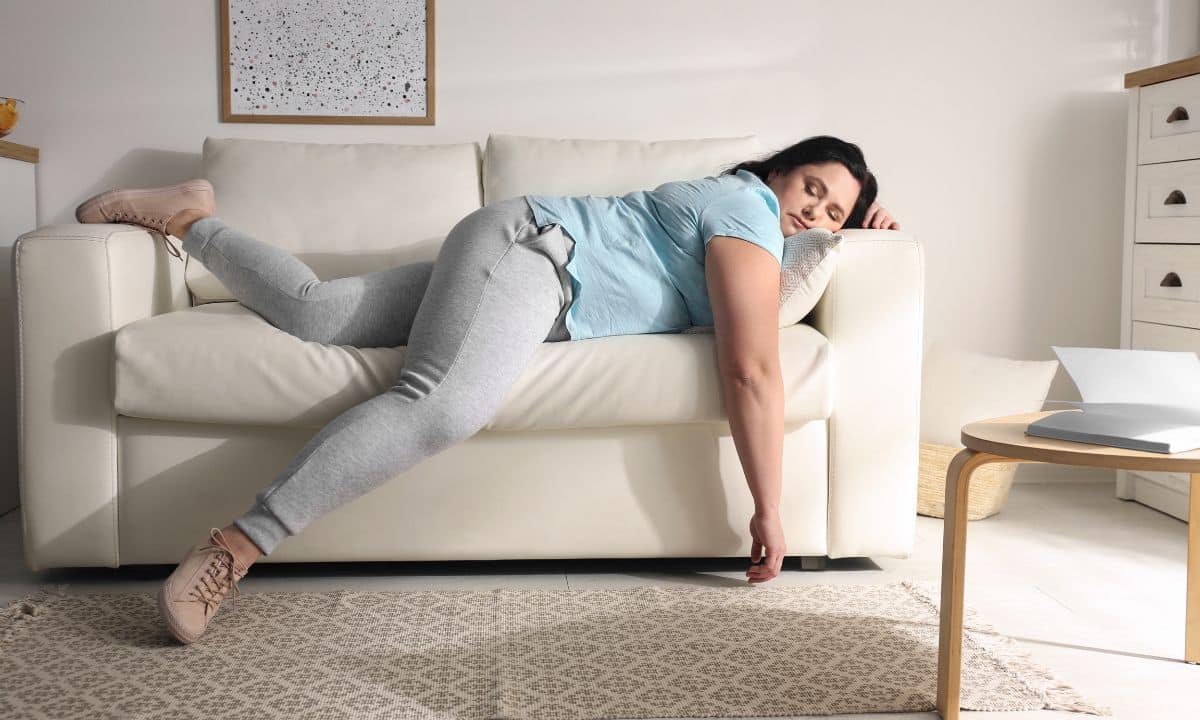
Emily is 53. The weight crept up quietly since perimenopause hit around 2020, a few pounds most years, until one day it added up to 40. She’s busy, hasn’t exercised in years, and lately she just doesn’t feel like herself. She knows what she “should” be doing. She just can’t find the motivation to start.
If that’s you too, here’s the first thing to know: it’s not a lack of willpower.
Hormones shift your mood, sleep gets harder, and you’re too tired to do much of anything. Weight loss is harder than it’s ever been, and on top of all that, you’re probably part of the sandwich generation: caring for aging parents, raising kids, or helping with grandkids, and maybe still working a full-time job on top of it all.
Motivation has a hard time competing with all of that.
If you’re tired, discouraged, and the motivation just isn’t there most days, this is for you. Here’s where I’d start.
Why You Gain Weight in Menopause
It’s not just diet and exercise.
Estrogen drops, metabolism slows, muscle gets harder to hold onto, sleep falls apart, blood sugar swings more than it used to, and inflammation creeps up.All of it working against you at the same time, which is why the same routine that used to keep your weight steady may not work anymore.
None of that is a personal failure. It’s biology. I go into the full breakdown in Why Do You Gain Weight During Menopause? if you want the mechanics.
Here, though, let’s talk about where to actually start.
Where to Start
Find Your Why
Ask yourself why you’re trying to get healthy and lose weight.
This isn’t a quick fix, and that’s exactly why your reason for doing it needs to be strong. Even with the help of a GLP-1 medication, the daily work doesn’t disappear; you still have to cook healthy meals, get to the grocery store, find time to move, keep showing up.
It’s not something you do hard for a week and then let go of; it’s ongoing effort, which means you need a real reason to keep coming back to it.
So think about why you’re doing this, and then go a layer deeper. Yes, it’s nice to fit into a pair of jeans you love. But what actually comes with that? Is it feeling better every day instead of just some days? Is it being able to get down on the floor and back up again to play with your grandkids, or future grandkids? Is it traveling with your partner and actually being able to enjoy it, keep up, not sit out?
Whatever it is, keep it front and center. On the days it’s hard, and there will be plenty of those, that’s the thing you hold onto.



Start With One Thing
If you’re looking at everything- cooking differently, exercising, sleeping better, managing stress, and feeling like there’s no way to do all of it, stop trying to do all of it.
Pick one thing. Just one. Either something that gives you back a little time or energy, or something that has a real, direct effect on your weight. Not everything you “should be doing.” One.
It doesn’t need to be the most powerful thing you could do. It just needs to be something you’ll actually do:
- A 10-minute walk every morning
- Drinking more water throughout the day
- Putting your phone away an hour before bed, so your sleep has a fighting chance
- Pairing your carbs with protein or fiber instead of eating them alone, to keep blood sugar steadier and cravings quieter
Something small enough that skipping it feels harder than doing it. Once that one thing is just part of your day, and it will be, sooner than you think, you’ll have a little more energy than you started with. Then add the next thing.
Improve Your Sleep
Poor sleep might be doing more damage to your weight-loss efforts than anything on your plate. When you’re exhausted, exercise and healthy cooking are the first things to go, and skipping them isn’t a discipline problem; it’s just what happens when your body hasn’t recovered.
Start with what you can actually control: put screens away an hour before bed, and pick a consistent bedtime, even a boring, unglamorous one. That alone moves the needle for many women.
If that’s not enough, and for a lot of women in menopause it isn’t, hot flashes, anxiety, and other sleep disruptors are worth digging into further. The Sleep Foundation has a resource specifically on menopause and sleep that’s worth a look if the basics aren’t cutting it.
Keep an Eye on Your Blood Sugar
Insulin resistance makes weight loss harder in more ways than one, but two matter most day-to-day: a blood sugar spike often triggers more sugar cravings right behind it, and the crash afterward can leave you feeling tired and foggy.
You don’t need to overhaul your eating to start working on this. Begin your meals with a vegetable or a salad before anything else on your plate, and if you’re going to have something sweet, eat it after a meal instead of on its own. Small changes like that start making a real
Set Realistic Goals
One of the biggest reasons people lose motivation is setting an impossible goal. If you have a lot to lose, the whole number can feel impossible before you even start. Aim for two to four pounds a month instead of trying to solve it all at once; it’s achievable, and each small win makes the next one easier to go after.
Celebrate Small Accomplishments
Every small win deserves some recognition, even something as simple as a relaxing bath. Non-scale victories count just as much as the number on the scale. For example:
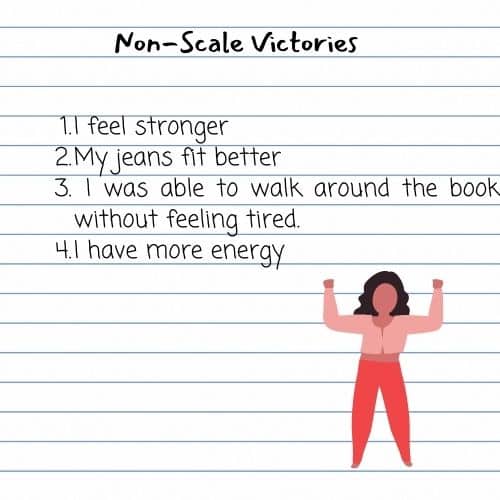
Keeping a running list helps on weeks when the scale isn’t moving as fast as you’d like.
Let Perfection Go
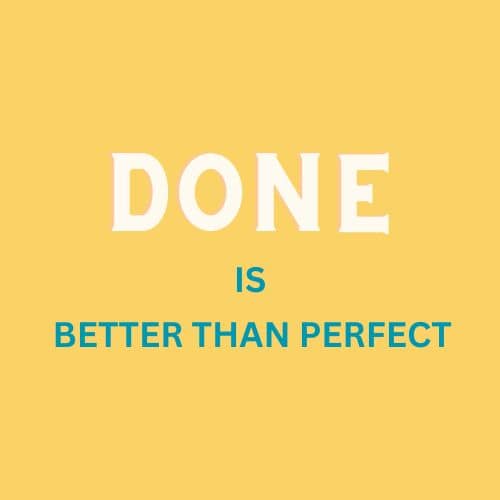
You don’t have to be perfect. A strict, all-or-nothing plan is hard to sustain for anyone, and harder still when you’re also dealing with hormonal shifts, bad sleep, and a full plate of responsibilities. Small, steady habits beat a perfect plan you can’t keep up with.
Eating a piece of cake or going off-plan once doesn’t undo your progress. What matters is that you keep going.
Create Routines
Routines take the decision-making out of motivation, which matters even more when your plate is already full. If you move your body first thing every morning, you don’t have to talk yourself into it later in a day that’s already packed; it’s just what you do.
The same goes for eating well: build the habit once, and you stop needing willpower to repeat it.
Remove Negative Influences
Distance yourself from people who bring you down, and lean toward people who cheer you on.
Comparing your progress to someone else’s is easy to fall into and rarely helpful. Everyone’s body and timeline are different, so focus on what you can do today instead of measuring yourself against anyone else.
Seek Professional Guidance
Find someone who actually understands the body of a woman in menopause, not just any dietitian or trainer, one who knows why what worked for you at 30 doesn’t work the same way now.
And if a GLP-1 medication helps, use it. It’s a real tool, not a shortcut you need to justify. Doing this alongside real support, whether that’s medication, a dietitian, or both, is not giving up on doing the work. It’s making the work possible.
Book a 1:1 Appointment with Me
If you want help figuring out where to start, that’s exactly what I do with my one-on-one clients. Book a session with me and let’s find your one thing together.
My Expert Opinion
You don’t need to fix everything this week. You don’t even need to fix everything this year. Pick the one thing you can actually do today, let it become easy, and build from there. That’s not settling; that’s how lasting change actually happens.
You are not failing at this. Your body is just asking for a different approach than it used to need. Be patient with yourself, and give yourself credit for starting.

Dr. Su-Nui Escobar, a Registered Dietitian/Nutritionist in Miami, FL, is dedicated to empowering women in perimenopause and menopause to live healthier, more satisfying lives.
With a doctorate in clinical nutrition from the University of North Florida, she has expertise in menopause and weight loss, including the unique challenges faced by those on weight loss medications.
Su-Nui’s passion for her field is evident in her previous role as the Academy of Nutrition and Dietetics spokesperson.