

Chocolate Prune Smoothie: It Can Help You Poop
Updated September 2026
Perimenopause affects more than your cycle; it can shift digestion too. Estrogen plays a role in digestive health, and as that hormone shifts, your digestive system can respond with different GI symptoms, including constipation.
This chocolate prune smoothie is where I’d start. Prunes are high in fiber and contain sorbitol, a natural sugar that pulls water into your gut and gets things moving again.
If you’re also on a GLP-1 medication like Ozempic, Wegovy, Mounjaro, Zepbound, or Foundayo, slower digestion is one of the most common side effects I hear about, so this one’s worth keeping in your back pocket.
Try it next time you’re feeling backed up, and let me know how it goes.
Ingredients
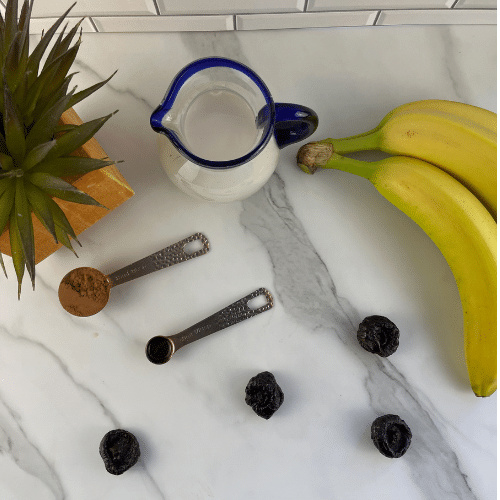
Prunes
Prunes help with constipation for two reasons. First, they contain fiber that bulks up stool. Second, they have a natural laxative, sorbitol, that pulls water into your gut to help things move along.
Prunes might also help ease inflammation, though that’s not what they’re known for. They also contain polyphenols, plant compounds that early research links to lower inflammation, along with fiber. Perimenopause is an inflammatory process, and inflammation drives weight gain during this time.
Milk
This smoothie is built around fiber, so it’s worth choosing a milk that pulls its own weight on protein too, especially in perimenopause and menopause, when protein needs go up, and again if you’re on a GLP-1, when appetite is lower, and every ingredient has to count.
Cow’s milk and soy milk are the two best picks here. Both carry real protein, roughly 8 grams per cup, while other plant milks like almond, oat, or cashew usually have closer to 1 gram.
Protein Powder
Milk gets this smoothie partway to a real meal’s worth of protein, but two tablespoons of chocolate protein powder is what closes the gap, especially if this smoothie is standing in for breakfast rather than sitting next to it.
It pulls double duty on flavor too, deepening the chocolate side alongside the cacao powder. If you’d rather leave it out or swap in something else, like Greek yogurt or a protein-fortified milk, that works; just know the nutrition facts above are calculated with chocolate protein powder specifically, so swapping will shift those numbers a bit.
Banana
Bananas add fiber to this smoothie, on top of what the prunes already bring, plus natural sweetness that balances the prunes’ tartness. Potassium comes along for the ride, one more thing bananas are known for.
They also help this smoothie hold you over longer. Fiber slows digestion, which matters if this is standing in for a real breakfast, especially when your appetite is already lower on a GLP-1.
Unsweetened Cacao Powder
Cacao is what makes this a chocolate smoothie, but it does more than add flavor. It’s a good source of magnesium, the same mineral that helps relax the muscles in your gut and keep things moving, along with iron, copper, and zinc.
Magnesium pulls double duty here too. It’s one of the most common nutrients I recommend for the sleep and mood changes that show up in perimenopause and menopause, so getting more of it through cacao works on more than one front.
Prune FAQ
Are Prunes Good for Constipation?
Yes, they are! The naturally present sorbitol is an effective laxative, and the high fiber content helps to bulk up stools and get things moving again. Many hospitals even have prune juice available to help patients with constipation. It works wonders!
Are Prune Smoothies High in Fiber?
Two ingredients in this smoothie have fiber: prunes and bananas. This particular chocolate prune smoothie contains 6 grams of fiber.
Are Bananas High in Sugar?
Bananas are higher in sugar than other fruits. However, the fiber in the banana helps release this sugar slowly, helping stabilize blood sugar and keep you feeling full longer.
For perspective, one medium banana has 14 grams of sugar.
Other Foods to Relieve Constipation
Kiwis are a good one to add to your day: they bring fiber, plus an enzyme called actinidin that may support digestion, and research suggests they help with regularity on their own, no smoothie required.
Chia seeds work a different way. They turn into a gel once they meet liquid, which helps move things along, and they stir easily into yogurt, oatmeal, or another smoothie.
A cup of hot coffee can help too. The hot water and compounds like caffeine both have a mild laxative effect, so it’s often the fastest fix on a slow morning.
And remember the ABCs of constipation relief: water, movement, and fiber. Everything on this list works better when those three are already in place.
Chocolate Prune Smoothie Recipe
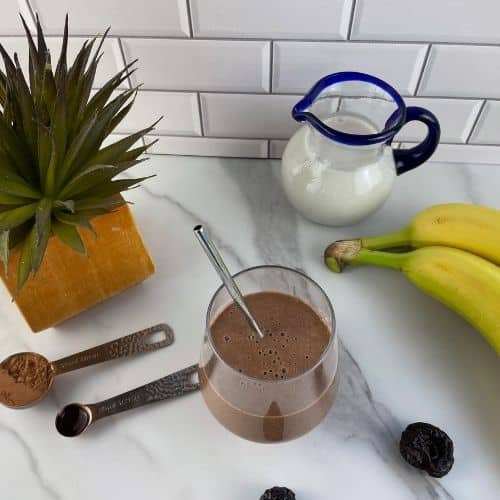
Chocolate Prune Smoothie
Equipment
- 1 Blender
Ingredients
- 1 cup milk, 1%
- 3 each prunes pitted
- 1 banana frozen
- 1 tbsp unsweetened cacao powder
- 1/2 tsp vanilla extract
- 2 tbsp chocolate protein powder

Instructions
- Blend all ingredients in a blender until smooth and creamy. Enjoy immediately!
Notes
Nutrition
The Bottom Line
Smoothies are a great way to add more fiber and fluid to your diet, both of which help relieve constipation. If you’re in perimenopause or menopause, or managing a GLP-1 medication, this is often one of the simplest changes that makes a real difference.
So what are you waiting for? Get blending!
Want more of this? I share recipes like this one on Instagram, along with constipation tips and what I’m learning about GLP-1 and life after 45. Come follow along: @nutritionwithdrsu. And if you make this smoothie, tag me, I’d love to see it.

Dr. Su-Nui Escobar, a Registered Dietitian/Nutritionist in Miami, FL, is dedicated to empowering women in perimenopause and menopause to live healthier, more satisfying lives.
With a doctorate in clinical nutrition from the University of North Florida, she has expertise in menopause and weight loss, including the unique challenges faced by those on weight loss medications.
Su-Nui’s passion for her field is evident in her previous role as the Academy of Nutrition and Dietetics spokesperson.